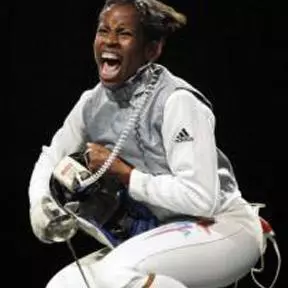
Erinn Smart Earns Olympic Silver Medal in Women's Team Foil
8/16/2008 12:00:00 AM | Fencing
BEIJING, CHINA ? After striking out in two previous trips to the Olympics, Erinn Smart '01BC struck silver at the Beijing Olympic Games, as her United States Women's Foil Team earned the silver medal in Women's Team Foil.
Smart played a major role in the successful run of the United States team, which overcame the next-to-last seed to stun defending world champion Poland and shock powerful Hungary, in order to reach the gold medal match.
The U.S. three-person team, consisting of Smart, Harvard's Emily Cross, and Hanna Thompson, formerly of Ohio State, won squeakers over the Poles, 31-30 and the Hungarians, 35-33, before losing to top-seeded Russia for the gold medal, 28-11.
Smart was ecstatic at her third Olympics; she was an alternate in 2000 and competed in 2004.
"It's surreal," she said. "It actually came together for us today. It's a dream come true."
The dream almost didn't happen. Lightly regarded among the world's fencing powers, the U.S. was seeded seventh in the eight-team field, ahead of only Egypt. As the seventh seed, they drew the second-seeded Poles in the first round.
Olympic Team matches are decided by total touches, which initially hurt the Americans. After the first head-to-head round, they trailed Poland, 22-15. But Thompson routed Magdalena Mroczkiewicz, 7-0, to tie the match at 22-all.
Cross then edged Malgozata Wojtkowiak, 3-2, giving the U.S. a 25-24 lead with one bout to go. As Smart stepped onto the piste (strip), she knew she could not afford to lose.
And she came through, tying Sylwia Gruchala, ranked 21st among the world's women's foilists, 6-6. It gave the U.S. the 31-30 victory.
However, Hungary loomed in the semifinals. The Hungarians would send out three foilists, all of whom are ranked in the world's top 15! It looked far too daunting a task for the Americans.
"We are usually the underdogs," Smart noted, "and sometimes the big guys fall asleep on us."
Did the Americans catch the Hungarians napping, perhaps looking ahead to meeting the winner of the Russia-Italy match for the gold? Possibly.
Erinn Smart lost her first bout to Edina Knapek, but by only 4-3. Her teammates were more successful, and the U.S. quickly took a team lead.
Up by just three touches, 18-15, they won three straight by scores of 4-2, 4-1, and 7-1, the latter giving the U.S. a 33-19 lead.
Smart fenced the final bout, against Aida Mohamed, ranked 11th in the world. Mohamed proved too much for her, posting touch after touch. But the American margin was too large, and Mohamed's 14-2 victory was only enough to bring the Hungarians within two, 35-33. Amazingly, Hungary had won only three of the nine bouts.
The gold medal loomed, just one match away. But mighty Russia stood in the way. The top-seeded Russians, the FIE's top-ranked team, had edged Italy in extra time, 22-21, and was at the top of its form.
The match began on a promising note, as Emily Cross won a 2-1 bout. Thompson lost, 2-0, and Erinn stepped on to the piste, facing Evgenia Lamonova.
The Russian fencer is ranked 10th in the world, but Smart captured the taut bout, 2-1, tying the match at four touches apiece.
If the Russians had been sleeping (figuratively), they must have heard an alarm clock. They won the next six bouts by a combined 24-7 (touches), giving them an insurmountable lead. Smart lost twice in that string, 3-0 and 5-0, but her teammates were no more successful than she. The final score was 28-11.
Although Smart would have liked a gold-medal victory, she noted that, "Russia is the World No. 1 team, so it's not that bad a result."
She explained, "Russia has much more experience than us. We sometimes hesitated to attack and sometimes we rushed to get a point but didn't. I still think we are capable of fencing well. We just didn't concentrate enough."
The medal was the fifth for the United States in Beijing Olympics competition. The U.S. earned gold, silver and bronze in individual women's sabre, and bronze in women's sabre team competition.
The Women's Team Foil silver was a triumph for not only the Ivy League, with Smart and Cross, but also for the State of New York ? Smart comes from Brooklyn and Cross from Manhattan (where she studied under Columbia's Aladar Kogler at the Fencers Club), while Thompson hails from Rochester.
Smart played a major role in the successful run of the United States team, which overcame the next-to-last seed to stun defending world champion Poland and shock powerful Hungary, in order to reach the gold medal match.
The U.S. three-person team, consisting of Smart, Harvard's Emily Cross, and Hanna Thompson, formerly of Ohio State, won squeakers over the Poles, 31-30 and the Hungarians, 35-33, before losing to top-seeded Russia for the gold medal, 28-11.
Smart was ecstatic at her third Olympics; she was an alternate in 2000 and competed in 2004.
"It's surreal," she said. "It actually came together for us today. It's a dream come true."
The dream almost didn't happen. Lightly regarded among the world's fencing powers, the U.S. was seeded seventh in the eight-team field, ahead of only Egypt. As the seventh seed, they drew the second-seeded Poles in the first round.
Olympic Team matches are decided by total touches, which initially hurt the Americans. After the first head-to-head round, they trailed Poland, 22-15. But Thompson routed Magdalena Mroczkiewicz, 7-0, to tie the match at 22-all.
Cross then edged Malgozata Wojtkowiak, 3-2, giving the U.S. a 25-24 lead with one bout to go. As Smart stepped onto the piste (strip), she knew she could not afford to lose.
And she came through, tying Sylwia Gruchala, ranked 21st among the world's women's foilists, 6-6. It gave the U.S. the 31-30 victory.
However, Hungary loomed in the semifinals. The Hungarians would send out three foilists, all of whom are ranked in the world's top 15! It looked far too daunting a task for the Americans.
"We are usually the underdogs," Smart noted, "and sometimes the big guys fall asleep on us."
Did the Americans catch the Hungarians napping, perhaps looking ahead to meeting the winner of the Russia-Italy match for the gold? Possibly.
Erinn Smart lost her first bout to Edina Knapek, but by only 4-3. Her teammates were more successful, and the U.S. quickly took a team lead.
Up by just three touches, 18-15, they won three straight by scores of 4-2, 4-1, and 7-1, the latter giving the U.S. a 33-19 lead.
Smart fenced the final bout, against Aida Mohamed, ranked 11th in the world. Mohamed proved too much for her, posting touch after touch. But the American margin was too large, and Mohamed's 14-2 victory was only enough to bring the Hungarians within two, 35-33. Amazingly, Hungary had won only three of the nine bouts.
The gold medal loomed, just one match away. But mighty Russia stood in the way. The top-seeded Russians, the FIE's top-ranked team, had edged Italy in extra time, 22-21, and was at the top of its form.
The match began on a promising note, as Emily Cross won a 2-1 bout. Thompson lost, 2-0, and Erinn stepped on to the piste, facing Evgenia Lamonova.
The Russian fencer is ranked 10th in the world, but Smart captured the taut bout, 2-1, tying the match at four touches apiece.
If the Russians had been sleeping (figuratively), they must have heard an alarm clock. They won the next six bouts by a combined 24-7 (touches), giving them an insurmountable lead. Smart lost twice in that string, 3-0 and 5-0, but her teammates were no more successful than she. The final score was 28-11.
Although Smart would have liked a gold-medal victory, she noted that, "Russia is the World No. 1 team, so it's not that bad a result."
She explained, "Russia has much more experience than us. We sometimes hesitated to attack and sometimes we rushed to get a point but didn't. I still think we are capable of fencing well. We just didn't concentrate enough."
The medal was the fifth for the United States in Beijing Olympics competition. The U.S. earned gold, silver and bronze in individual women's sabre, and bronze in women's sabre team competition.
The Women's Team Foil silver was a triumph for not only the Ivy League, with Smart and Cross, but also for the State of New York ? Smart comes from Brooklyn and Cross from Manhattan (where she studied under Columbia's Aladar Kogler at the Fencers Club), while Thompson hails from Rochester.

Sunday, March 22
Sunday, March 22
Wednesday, July 24
Tuesday, July 23