Lions Take Full Advantage of Sports Nutrition Program
1/29/2015 4:15:00 PM | Football
Now a little more than a week into the offseason training program, many of the Columbia football players have personal goals they plan to reach by the time spring ball rolls around. Those goals can range from setting a new max in a certain lift to simply dropping a couple pounds while adding lean mass. Whatever those various goals may be, there's one aspect of the Lions' daily lives that serves as a common denominator for all of them to help achieve them—their diets.
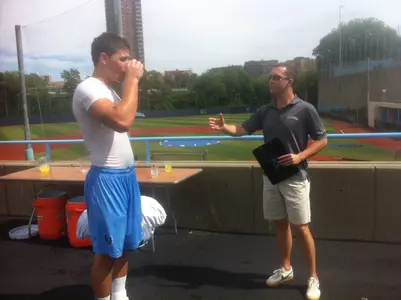
And that's where Andrew James Pierce comes in.
Pierce took over as Columbia football's team nutritionist prior to the 2013 season. His job goes well beyond telling players what unhealthy foods to avoid. With more than 90 players on the roster during the season, he believes formulating a diet plan for each individual player is one of the most important aspects of his role with the team.
“What works for one person might not necessarily work for another and each athlete has different objectives, different positions within the sport,” Pierce said. “I try to focus in on the specific needs of the individual and address each unique situation.”
He takes into account a variety of different factors to help design the ideal diet for each player. He weighs things like food allergies or other dietary restrictions with personal preference and combines those aspects with the goals each player has set for himself. Pierce meets with the players regularly, and many times, they'll be the ones to initiate the discussion.
“Many players will seek me out for guidance on how to facilitate their goals,” Pierce said, “whether it's related to weight status such as body composition and muscle growth or performance-related, such as optimizing speed, strength and endurance.”
Pierce also works closely with the coaches, trainers, weight room staff, dining services and many others to help give each player the ideal diet for their athletic performance. This includes developing menus for training camp, pre-game meals, and strength room supplements. He also makes sure there is food available to the players at the ideal times to maximize their performance, including one timeslot unique to Columbia.
While other schools may have athletes filing into practice from all over campus, all the Lions travel to practice the same way. The players have a short bus-ride from the school's main campus up to the Baker Athletic Complex before workouts and practices, a trip Pierce makes sure they take full advantage of.
“One of the benefits of having a decentralized athletic facility is that the bus ride up to The Campbell Sports Center provides an opportunity to feed the guys prior to practice and lift,” Pierce said, “without having to take time away from somewhere else.”
The obvious signs to show Pierce's plans are working are the hard numbers, like changes in body composition and weight loss or gain. His interaction with the coaches, however, provides him another glimpse at the positive effects. A coach will tell him that a player looks a step quicker or is visibly stronger than he was earlier in the year, and that, combined with the numerical data, shows Pierce that he's achieving some of his own goals as the team nutritionist by helping the players reach their goals on the field.
“Since our goal at Columbia is to build a leading program in the Ivy League, I strive to offer a sports nutrition program that facilitates performance and enhances the well-being of our athletes,” he said. “I strongly believe that eating right will make a positive difference on the field and in the classroom.”