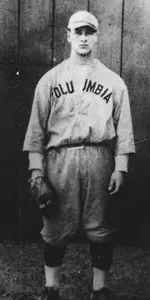
July 4 Marks the 70th Anniversary of Former Lion Lou Gehrig's Farewell Speech
7/2/2009 11:00:00 AM | Baseball, General
On July 4th, every Major League Baseball Club playing at home will conduct a special on-field ceremony to commemorate Lou Gehrig's Yankee Stadium farewell speech. This will mark the 70th anniversary of his speech.
Lou Gehrig, who was inducted into Columbia's inaugural class of the Hall of Fame, was one of the greatest student-athletes ever to play for Columbia. The son of German immigrants, Gehrig was the only one of four children to survive. He was preparing to enter Columbia University when he was advised by Giants Manager John McGraw to play summer professional baseball under an assumed name (“Henry Lewis”). “Everyone does it,” McGraw explained, even though the illegal ball playing could have jeopardized Gehrig's collegiate sports career. Gehrig was discovered after playing a dozen games for Hartford of the Eastern League. As a result, Gehrig was banned from intercollegiate sports during his freshman year, 1921-22.
Gehrig returned to sports to play fullback and tackle during Columbia's 1922 football season, and then pitched and played first for the Columbia Nine in 1923. Signed by Yankee scout Paul Krichell in 1923, Gehrig returned to Hartford and hit .304. Called up to the majors in September, he hit .423 in 26 at-bats.
Manager Miller Huggins petitioned McGraw to permit Gehrig to replace the ailing Wally Pipp on the Yanks' roster for the World Series. McGraw, always looking for an edge, exercised his prerogative and refused. The Yankees won anyway. After a full season at Hartford, where Gehrig hit .369, he became a Yankee for good in 1925. This marked the beginning of an incredible career ? one that would see Gehrig play every game from more than 13 years. He started 2,130 consecutive games, something only Cal Ripken Jr. has been able to do since.
Gehrig won the Triple Crown in 1934, and led the American League in home runs, on-base, and slugging percentages in 1936, as theYankees recaptured the title. For the next two years, DiMaggio and Gehrig would dominate the league the way Gehrig and Ruth had, and the Yankees began a four-season dynasty that included winning four World Series and losing only three games out of 19. In 1936, Gehrig led the league in home runs and runs scored. In 1937, DiMaggio did the same.
In 1938, Gehrig fell below .300 for the first time since 1925, and it was clear that there was something wrong. He lacked his usual strength. Pitches he would have hit for home runs were only flyouts. Doctors diagnosed a gall bladder problem, and they put him on a bland diet, which only made him weaker. Wes Ferrell noticed that on the golf course, instead of wearing golf cleats, Gehrig was wearing tennis shoes and was sliding his feet along the ground. Ferrell was frightened. When asked if he would remove Gehrig from the lineup, Manager Joe McCarthy said, “That's Lou's decision.”
Gehrig played the first eight games of the 1939 season, but he managed only four hits. On a ball hit back to pitcher Johnny Murphy, Gehrig had trouble getting to first in time for the throw. When he returned to the dugout, his teammates complimented him on the “good play.” Gehrig knew when his fellow Yankees had to congratulate him for stumbling into an average catch it was time to leave. He took himself out of the game.
The next day, as Yankee captain, he took the lineup card to the umpires, as usual, but his name was not on the roster. Babe Dahlgren was stationed at first. The game announcer intoned, “Ladies and gentlemen, Lou Gehrig's consecutive streak of 2,130 games played has ended.”
Doctors at the Mayo Clinic diagnosed Gehrig as having a very rare form of degenerative disease: amyotrophic lateral sclerosis. There was no chance he would ever play baseball again.
New York writer Paul Gallico suggested the team have a recognition day to honor Gehrig on July 4, 1939. With more than 62,000 fans in attendance, Gehrig spoke his immortal words of thanks.
Click here for more details from Major League Baseball.
Click here for a brief video excerpt from Gehrig's speech.
Lou Gehrig, who was inducted into Columbia's inaugural class of the Hall of Fame, was one of the greatest student-athletes ever to play for Columbia. The son of German immigrants, Gehrig was the only one of four children to survive. He was preparing to enter Columbia University when he was advised by Giants Manager John McGraw to play summer professional baseball under an assumed name (“Henry Lewis”). “Everyone does it,” McGraw explained, even though the illegal ball playing could have jeopardized Gehrig's collegiate sports career. Gehrig was discovered after playing a dozen games for Hartford of the Eastern League. As a result, Gehrig was banned from intercollegiate sports during his freshman year, 1921-22.
Gehrig returned to sports to play fullback and tackle during Columbia's 1922 football season, and then pitched and played first for the Columbia Nine in 1923. Signed by Yankee scout Paul Krichell in 1923, Gehrig returned to Hartford and hit .304. Called up to the majors in September, he hit .423 in 26 at-bats.
Manager Miller Huggins petitioned McGraw to permit Gehrig to replace the ailing Wally Pipp on the Yanks' roster for the World Series. McGraw, always looking for an edge, exercised his prerogative and refused. The Yankees won anyway. After a full season at Hartford, where Gehrig hit .369, he became a Yankee for good in 1925. This marked the beginning of an incredible career ? one that would see Gehrig play every game from more than 13 years. He started 2,130 consecutive games, something only Cal Ripken Jr. has been able to do since.
Gehrig won the Triple Crown in 1934, and led the American League in home runs, on-base, and slugging percentages in 1936, as theYankees recaptured the title. For the next two years, DiMaggio and Gehrig would dominate the league the way Gehrig and Ruth had, and the Yankees began a four-season dynasty that included winning four World Series and losing only three games out of 19. In 1936, Gehrig led the league in home runs and runs scored. In 1937, DiMaggio did the same.
In 1938, Gehrig fell below .300 for the first time since 1925, and it was clear that there was something wrong. He lacked his usual strength. Pitches he would have hit for home runs were only flyouts. Doctors diagnosed a gall bladder problem, and they put him on a bland diet, which only made him weaker. Wes Ferrell noticed that on the golf course, instead of wearing golf cleats, Gehrig was wearing tennis shoes and was sliding his feet along the ground. Ferrell was frightened. When asked if he would remove Gehrig from the lineup, Manager Joe McCarthy said, “That's Lou's decision.”
Gehrig played the first eight games of the 1939 season, but he managed only four hits. On a ball hit back to pitcher Johnny Murphy, Gehrig had trouble getting to first in time for the throw. When he returned to the dugout, his teammates complimented him on the “good play.” Gehrig knew when his fellow Yankees had to congratulate him for stumbling into an average catch it was time to leave. He took himself out of the game.
The next day, as Yankee captain, he took the lineup card to the umpires, as usual, but his name was not on the roster. Babe Dahlgren was stationed at first. The game announcer intoned, “Ladies and gentlemen, Lou Gehrig's consecutive streak of 2,130 games played has ended.”
Doctors at the Mayo Clinic diagnosed Gehrig as having a very rare form of degenerative disease: amyotrophic lateral sclerosis. There was no chance he would ever play baseball again.
New York writer Paul Gallico suggested the team have a recognition day to honor Gehrig on July 4, 1939. With more than 62,000 fans in attendance, Gehrig spoke his immortal words of thanks.
Click here for more details from Major League Baseball.
Click here for a brief video excerpt from Gehrig's speech.




Highlights: BASE | Columbia 9, Cornell 1
Sunday, May 03
Highlights: BASE | Columbia 2, Cornell 0
Saturday, May 02
Highlights: BASE | Columbia 8, Brown 16
Wednesday, April 29
Highlights: BASE | Columbia 15, Yale 15
Sunday, April 26